What to Do When You Want to Start Learning Quantum Physics,


Forget the Scary Math—Quantum Physics Is for Everyone
Quantum physics has a reputation for being this intimidating, hyper-complicated math realm that only super-geniuses in lab coats can touch.
If you’ve ever felt a spark of curiosity about it, only to immediately back away thinking, "Yeah right, I can barely calculate a tip, let alone figure out quantum entanglement," you are definitely not alone.
Here is the secret: you don't need a PhD, and you don't need to spend years mastering calculus just to appreciate how wildly cool the quantum world is.
If you want to start learning quantum physics today, here is a friendly, stress-free guide on how to dip your toes in without drowning.
Start with the Story, Not the Equations
Before diving into dense formulas, get to know the narrative.

Quantum physics is essentially a historical detective story full of eccentric thinkers—like Albert Einstein, Niels Bohr, and Erwin Schrödinger—who kept running into strange laboratory results that completely blew up traditional physics.
Start by reading beginner-friendly books or listening to audiobooks that tell the story of discovery. Great places to begin include:
Pop-science beginner guides that break down the history without heavy equations.
Six Easy Pieces by Richard Feynman: Feynman had an incredible talent for explaining complex topics using simple, everyday metaphors.
Reality Is Not What It Seems by Carlo Rovelli:
A beautifully written introduction to modern physics.
When you focus on the history and conceptual ideas first, it feels less like studying a dry textbook and more like following an epic sci-fi story.
Focus on the Core "Mind-Bending" Concepts
Don't try to absorb everything all at once.
Quantum physics gets really fun when you focus on getting comfortable with just a few key, fascinating principles:
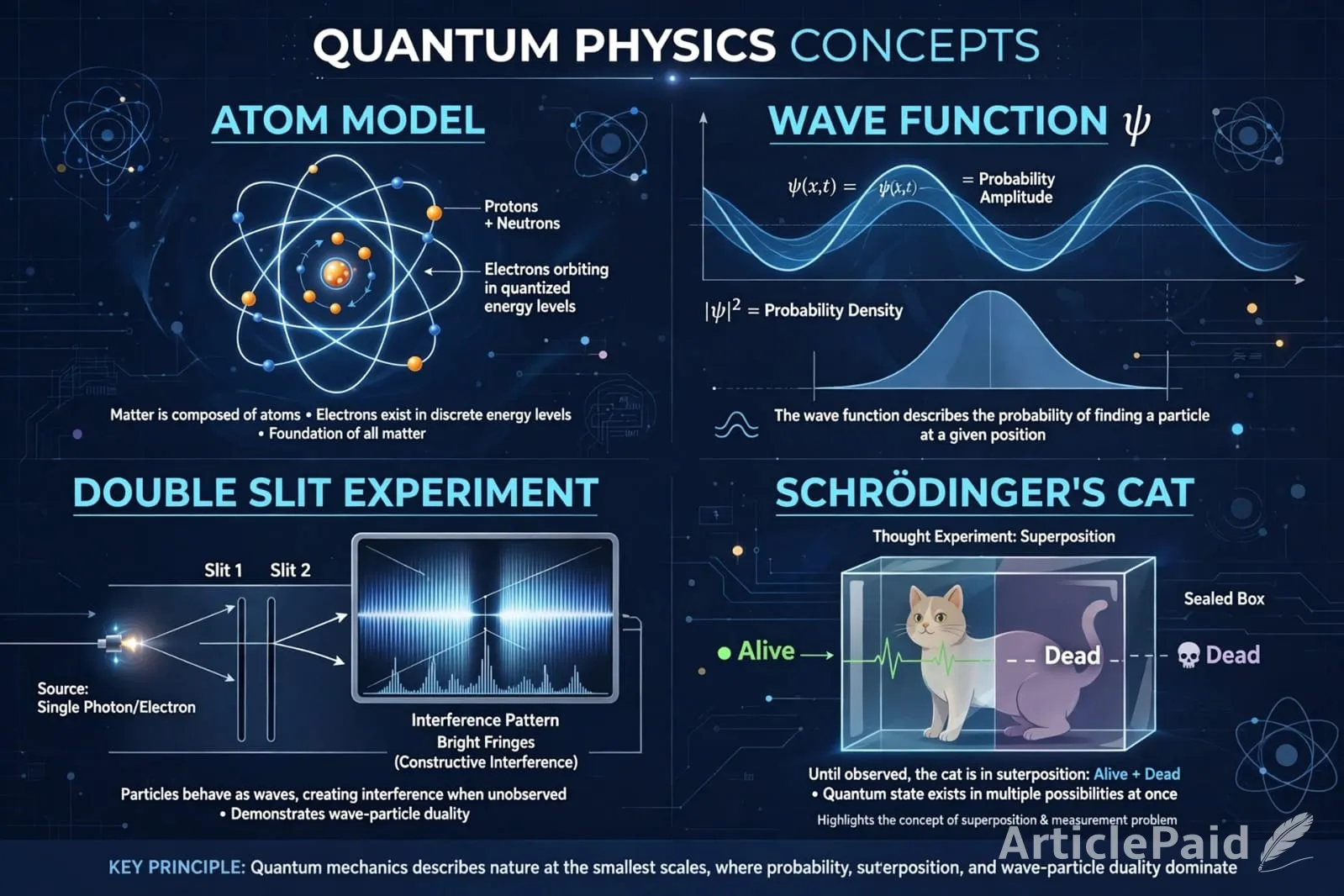
Wave-Particle Duality:
The idea that light and tiny particles can act like both solid little marbles and spreading waves at the same time.
Superposition:
The concept that a particle can exist in multiple states at once until someone actively measures or observes it (this is where Schrödinger's infamous cat comes in!).
Quantum Entanglement: Einstein called this "spooky action at a distance"—when two particles become linked so closely that changing one instantly affects the other, no matter how many light-years apart they are.
Once you get a feel for these core ideas, the rest of quantum theory starts having a logical context to sit in.
Leverage Visuals and Great Content Creators
We live in the absolute golden age of self-education. You don't have to struggle through dense academic papers when there are brilliant creators making stunning visual explanations online.
Head over to video platforms and search for creators who excel at visual teaching:
PBS Space Time: Excellent deep-dives that build up your knowledge step by step.
Veritasium:
Fantastic real-world demonstrations of quantum phenomena like the Double Slit Experiment.
MinutePhysics:
Quick, hand-drawn animations that make heavy physics concepts super digestible in under 5 minutes.
Seeing these concepts animated or visually demonstrated makes a world of difference for how your brain processes them.
Get Comfortable Being Confused
Here is a comforting thought: even the most brilliant physicists in human history were utterly baffled by quantum mechanics.
Richard Feynman famously remarked, "If you think you understand quantum mechanics, you don't understand quantum mechanics."
So when a concept makes your brain hurt, celebrate it!
That confusion just means your mind is stretching to accommodate something completely outside normal daily experience.
You don't have to solve the universe overnight; just enjoy the sense of wonder.
Connect It to the Real World Around You
It’s easy to think quantum physics is just abstract philosophy, but it actually powers the modern world you interact with every day.
Your smartphone, laser beams, hospital MRI scanners, solar panels, and LED lights all rely directly on quantum mechanics to function.
Knowing that the tech in your pocket runs on quantum behavior makes learning about it feel grounded, relevant, and insanely rewarding.











Responses (0)