How to Talk to Your Partner Without Arguing,


Having a healthy communication system is one of the most important parts of maintaining a successful relationship. Disagreements are going to naturally occur between people no matter how long they’ve been together. Everyone has their own individual experiences, expectations, opinions and emotional needs. This can cause some confusion, frustration and arguments between partners. However, there are ways to talk to each other with patience, respect and understanding so that these difficult topics can be discussed without affecting your relationship.
Talking to your partner so that you don’t get into an argument isn’t about avoiding difficult conversations. Instead, it means being able to have honest conversations whilst allowing your partner to feel their emotions.
1. Speak at the Right Time
People can become more emotional when they’re tired, hungry, stressed or feeling upset. This can cause a small disagreement to quickly turn into an argument.
When you need to talk to your partner about something important, allow both of you time to have your full attention. Don’t bring up a difficult topic when you’re both under pressure.
“You have something important to talk to me about? When would be a good time to talk?” This is a considerate way to ask and lets your partner know you’re thinking about them.
If you’re both feeling emotional, you could take a short break and come back to the topic later.
2. Listen to Understand, Not Just to Respond
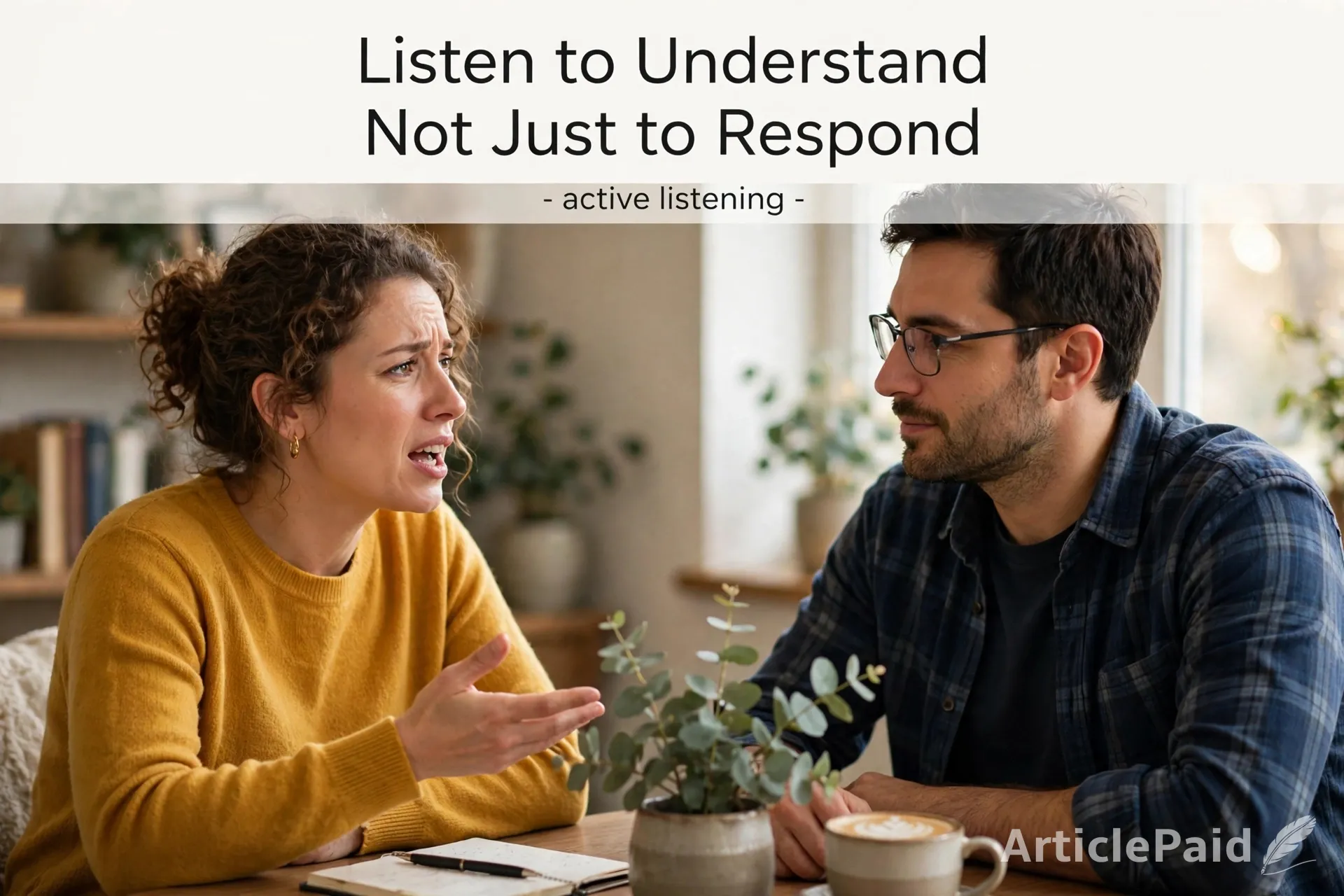
Many arguments happen between couples because both partners aren’t really listening to each other. Whilst one partner is talking, the other is already preparing their response, gathering evidence and considering what they’ll say. Neither partner will feel like they’re really being listened to.
By practising active listening you can help to change this. Listen to what your partner is saying, don’t interrupt and try to understand what they’re trying to say. Sometimes people may seem angry but this could be because they’re feeling disappointed, scared, lonely or seeking reassurance.
If your partner mentions they’re feeling overlooked and you respond with “I’m always busy, you know that!” They’ll feel like you’re dismissing their feelings. Instead, respond with “I understand you’ve been feeling overlooked. What’s been bothering you the most?”
You don’t have to agree with what they’re saying but showing them you’re listening to them with respect will make both of you feel safer to express your feelings.
3. Use "I" Statements Instead of Blaming
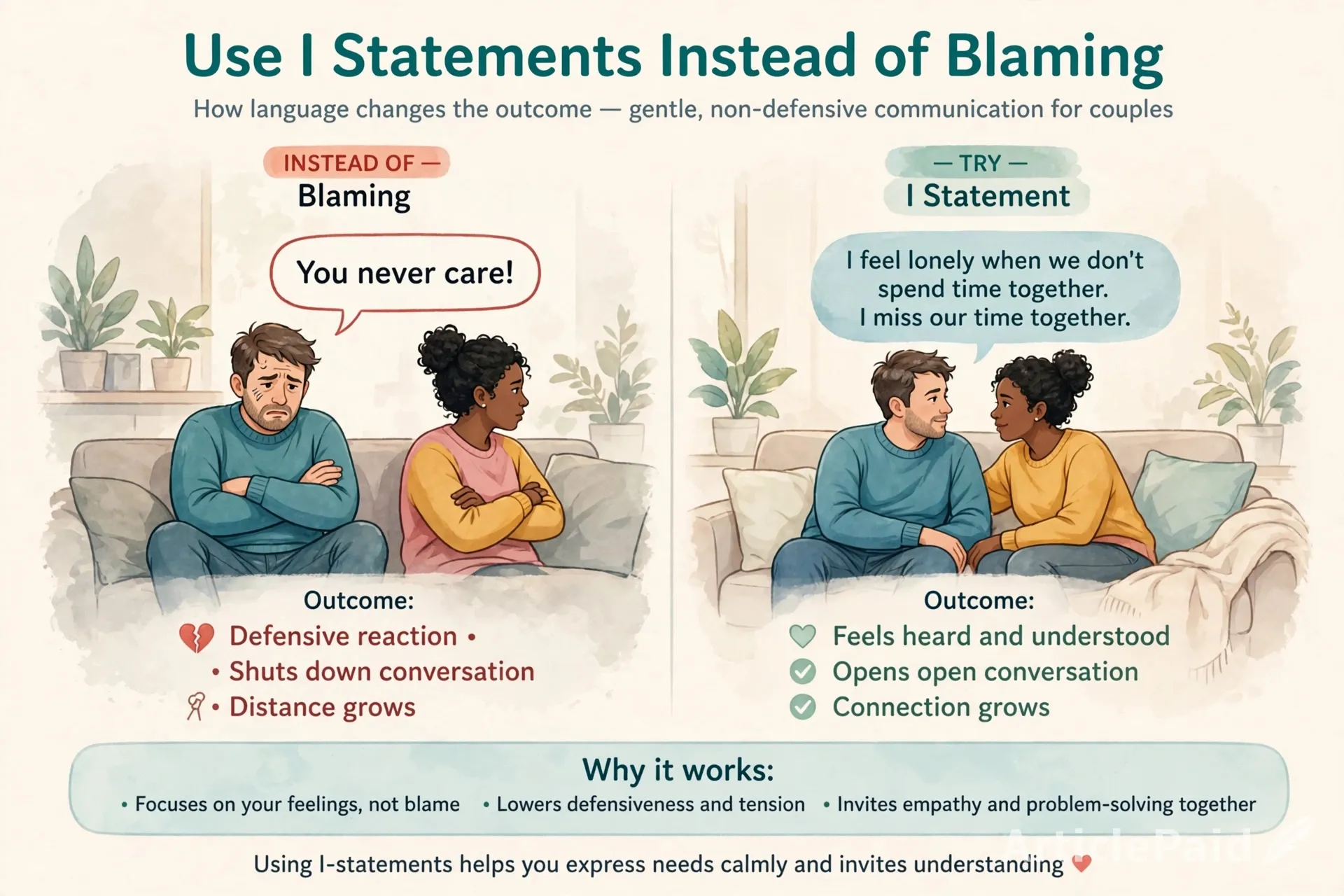
Using the right language can help you both understand each other. Often, when using accusatory statements like ‘You never listen to me’ or ‘You always make things difficult’, the other person will feel attacked.
Instead, explain how you’re feeling and what has happened to make you feel that way. Use ‘I’ statements to help you explain how you feel.
Instead of saying “You don’t care about me because you never spend time with me.” Try “I feel lonely when we don’t spend much time together. I’d like to spend more time with you.”
This helps you to explain how you’re feeling without making them feel defensive. It also gives your partner a better understanding of what you need.
Try to focus on specific behaviours rather than attacking their whole personality. This will make it easier to find a practical solution to the problem.
4. Control Your Emotions Before They Control the Conversation
When you’re feeling strong emotions it can be difficult to think clearly. This can cause you to shout, say hurtful things, mention past mistakes and say things you later regret. Becoming aware of how you’re reacting is an important step.
When you start to feel frustrated (increased heart rate, tense muscles, clenched fists, wanting to interrupt) take a moment to pause. Take a few deep breaths, relax and remind yourself your partner isn’t necessarily your enemy.
If you need more time to calm down then let them know. “I want to sort this out but I’m feeling overwhelmed. Could we take 20 minutes and come back to it when we’re both feeling calmer?”
If possible, agree to come back to the topic. This should help both of you to manage your feelings.
5. Don’t Mention Past Mistakes
When getting into an argument it can be tempting to mention all your past disappointments. This can cause a simple discussion about housework to turn into a list of all the problems you’ve had in the past few months/years. This will make it difficult to find a solution to the current issue and will make both of you feel attacked.
Try to focus on one thing. If you’re upset about them not keeping their promise then just mention this.
If they’re doing the same thing repeatedly then calmly explain this to them. Give specific examples. Don’t use past mistakes as a weapon.
The aim of talking about the problem is to understand what has happened, recognise how it has affected you and decide how to handle similar situations in the future.
6. Learn To Accept Differences of Opinions
Having a healthy relationship doesn’t mean you’ll always agree. You may have different opinions on money, family, socialising, personal space and future plans. This doesn’t mean your relationship is failing.
Rather than seeing disagreements as something you need to win, ask yourself if it’s something you need to agree on.
Maybe one of you likes to stay in at the weekend and the other enjoys seeing their friends and discovering new places. Rather than forcing them to see things your way, have a discussion about how you can both feel comfortable.
Compromising will work best when neither of you feel like you’re losing who you are. Sometimes you’ll have to take turns, share the responsibilities or come up with a new plan.
7. Be Aware of How You’re Talking
Your body language, facial expressions, gestures, eye contact and tone of voice will affect how your message is received.
Saying something reasonable but in a sarcastic, loud or contemptuous tone can come across as offensive. Rolling your eyes, laughing or looking away whilst they’re talking can also come across as disrespectful.
Try to keep your voice at a comfortable level and keep your tone calm and respectful. Keep your body language open and don’t make any gestures that could be seen as threatening or dismissive. If you notice your tone has become harsh then apologise and try again.
“I’m sorry I shouted. I’m frustrated but I’d like to explain myself in a calmer tone.”
By genuinely trying to fix the conversation it won’t become a bigger issue in your relationship.
8. Focus on Solutions Instead of Winning

Your relationship shouldn’t be a competition. Even if you win the argument you may cause issues with trust or resentment as your partner may feel embarrassed or like they weren’t listened to.
Once both of you have explained your views, move onto finding a solution. Ask questions like “What can we do differently next time?” Or “What can we do to make us both feel more comfortable?”
Be specific when reaching an agreement. Instead of saying “We should communicate better.” Have an agreement to talk about changing the schedule in advance or have a set time each evening to have an uninterrupted conversation.
Give both of you the opportunity to contribute to the solution. Being fair will help the agreement to last longer as both of you will understand your responsibilities and know your concerns have been taken into consideration.
9. Say Thank You and Rebuild Connection
If you and your partner are frequently having arguments then you may start to focus more on each other’s negatives. Saying small thank-yous can help you both feel closer emotionally and make difficult conversations easier.
Thank them for what they do, recognise their effort and positive changes. Saying things like “Thank you for listening to me today.” Or “Thank you for trying to understand my point of view.” Will help you both to keep communication respectful.
Try to be genuine when saying thank you. Don’t use this as an excuse to avoid talking about serious issues. Spending quality time together can also help. Doing activities together, having meaningful conversations, laughing and doing little kind things will help you feel like a team and make handling conflict easier.
10. Know When Additional Support May Help
Sometimes it can be hard to solve communication issues without extra help. If you’re constantly having the same arguments then couples counselling can help you both to realise any unhelpful patterns and find healthy ways to communicate.
Seeking professional help can be very useful if your conversations are always very resentful, there are trust issues or big differences in important life decisions.
Also remember that not all conflicts are communication issues. If there are threats, intimidation, embarrassment, controlling behaviour or physical violence then this should not be seen as a normal argument. No one should have to put their safety at risk to keep a relationship. It’s more important to seek confidential help and look after your safety.
Conclusion
Learning how to talk to your partner without fighting takes patience and self-awareness. The most important skills to learn are speaking at the right time, listening, using ‘I’ statements, managing strong feelings, accepting differences and working together to find a solution.
Remember that having a healthy relationship doesn’t mean you’ll always agree. You should both treat each other with dignity even if you have different opinions. Some conversations will still be uncomfortable and mistakes will be made but as long as you’re willing to learn, take responsibility, apologise where needed and make meaningful changes then this is okay.
Next time you start to get into an argument take a moment to pause and ask yourself “Do I want to win this argument or do I want to understand each other?” Choosing to understand each other will change how you handle conflict and will help you build a trusting, emotionally secure and respectful relationship.









Responses (1)