
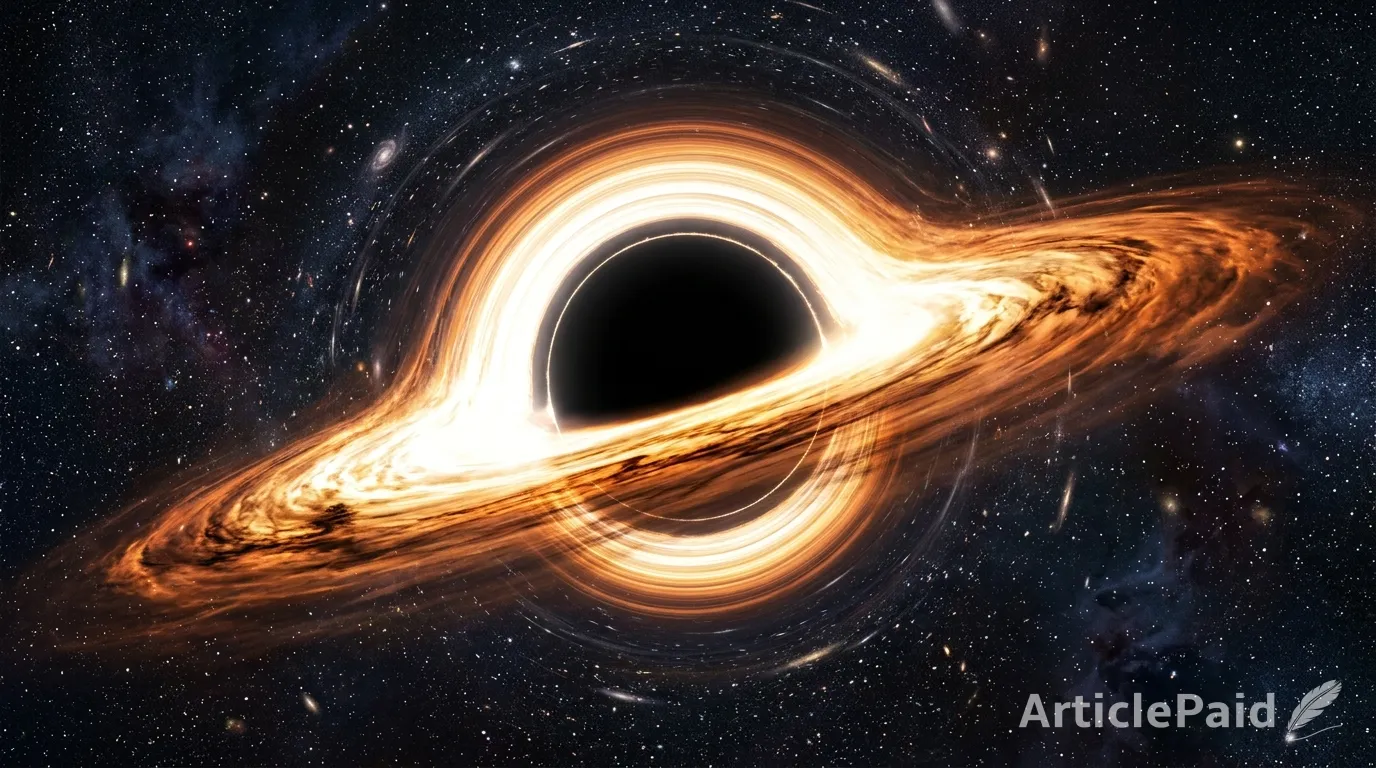
Black holes are areas in space that has a gravitational field so strong that nothing can escape once it passes the black holes event horizon. Due to it being so strong, not even light can escape. This means you cannot observe them directly using telescopes.
Now we have looked at what a black hole is let’s look at how they form, what happens around them and why scientist love studying them.
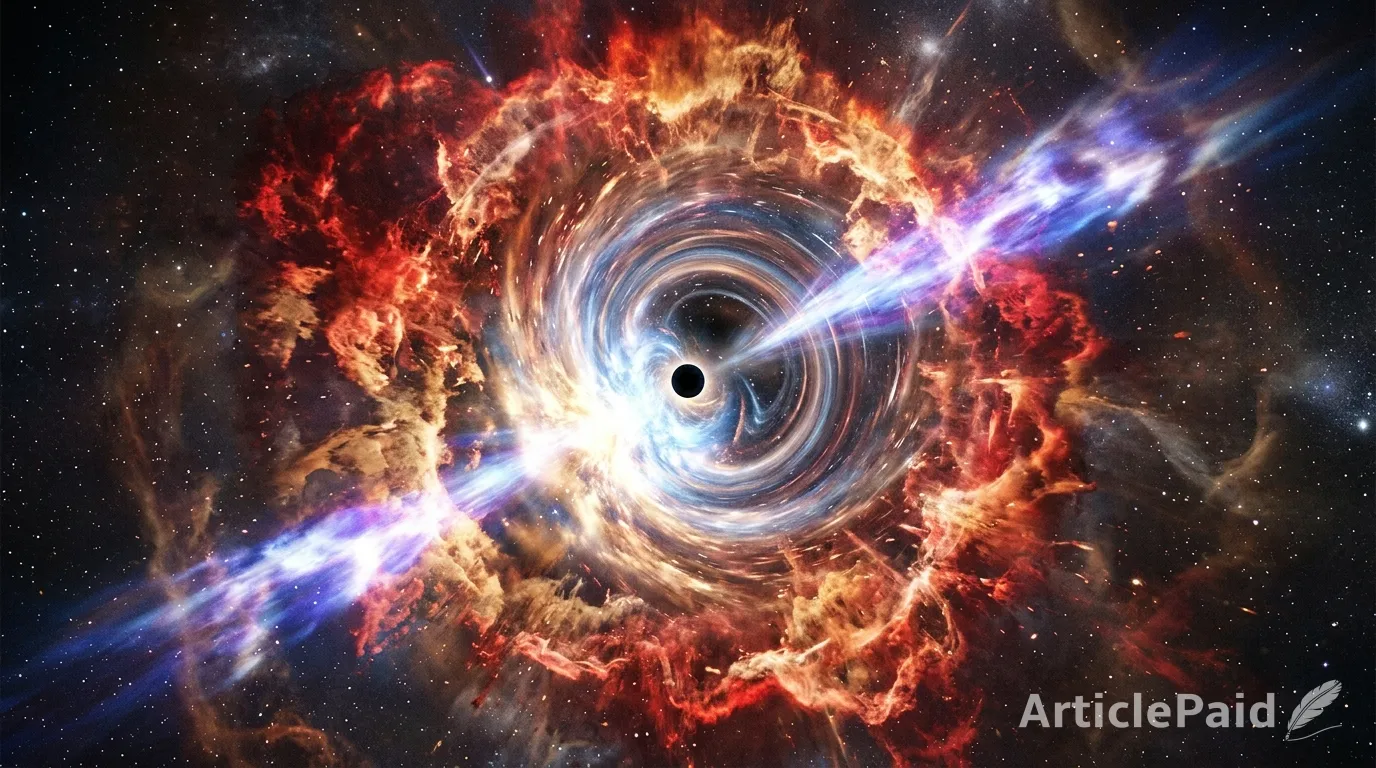 1. What is a black hole?
This is actually a very high density area due to a large mass of matter all in a small space.
Our understanding of gravity comes from the general theory of relativity by Albert Einstein. The theory states that gravity is caused due to matter and energy warping space-time. Masses create areas on space-time that curve and other objects can travel through.
A black hole forms when a large amount of mass is compacted together. This creates such a severe bend in space-time that an object could not escape if it was beyond a certain point. To escape the black hole would need to move faster than the speed of light which is not possible.
This point is called the event horizon.
2. How do they form?
Most black holes originate from giant stars reaching the end of their life.
Stars spend most of their life fusing materials in their cores to create energy. This creates pressure which balances out the force of gravity.
Eventually this fuel will run out for massive objects and their cores will begin to collapse in on themselves. This can create a black hole depending on how much mass remains.
Not all stars will create a black hole at the end of their life some create white dwarfs or neutron stars. Black holes are usually created if the collapsing core has a large mass, meaning nothing is known that can resist the force of gravity.
Scientists also study supermassive black holes which have millions or even billions of times the mass of our Sun. They are commonly seen at the centre of galaxies such as the Milky Way.
3. What is the event horizon?
This is one of the main features of black holes.
This is point where nothing can escape from the black hole to the rest of the universe. Even light cannot escape.
This is a region of space-time not a surface.
If you were to approach a black hole in a spacecraft and you do not enter the event horizon you should be able to escape. However if you do enter then all paths in the future will lead towards the centre of the black hole.
4. What happens if something falls into a black hole?
This will depend on the size of the black hole and its other properties.
Something could go through a process called spaghettification. This can happen due to one side of your approaching object being much closer to the black hole creating a larger gravitational force. The tidal force this causes could rip apart a small object before it reaches the event horizon. However for supermassive black holes the tidal forces are likely to be much smaller meaning they will not notice anything when passing through the event horizon.
It becomes much harder to understand what happens further inside. General relativity predicts that matter does fall into the centre of the black hole (called the singularity) in basic models. However scientist believe that we may need a full theory of quantum gravity so we can fully understand.
5. Why do black holes have such strong gravity?
Black holes are not always have the strongest gravity. They are special due to having a large amount of mass in a small space.
If somehow the sun was replaced with a black hole with the same mass our earth would orbit it in the same area. The gravity in the area would practically be the same.
However the difference between the two would be that the black hole would be very small. This means any object getting very close will have much more extreme gravity.
This shows that black holes are not space vacuums. They have gravity to affect objects around them like any other large mass.
6. How can scientists observe them?
Whilst they do not give off light from within the event horizon scientists can observe them by seeing the effects they cause.
As gas and dust are pulled towards the black hole this can create a hot spinning disc of gas. Friction and other factors can cause this area to become very hot. The gas will then give off radiation which can be picked up by telescopes.
Scientists can also identify them by seeing stars orbit an unseen large mass. Gravitational waves are also important in detecting them. These are waves in space-time created by massive objects such as black holes colliding and merging.
In 2019 the first ever black hole shadows image was released by scientists. This was in the galaxy Messier 87. In 2022 the Event Horizon Telescope collaboration discovered an image of Sagittarius A, the supermassive black hole at the centre of our Milky Way.
This has given us an amazing new way to study black holes.
7. Could they eventually vanish?
One of the most surprising things in modern science is that they can slowly lose energy in a process called Hawking Radiation.
This theory was proposed by scientist Stephen Hawking. It uses elements of quantum physics and general relativity to show that black holes can emit a small amount of radiation. This means they can slowly lose mass.
This would take a very long time for steller black holes. They will take much longer to evaporate than the current age of the universe.
Scientists have not yet detected Hawking Radiation coming from astrophysical black holes however it is an important prediction.
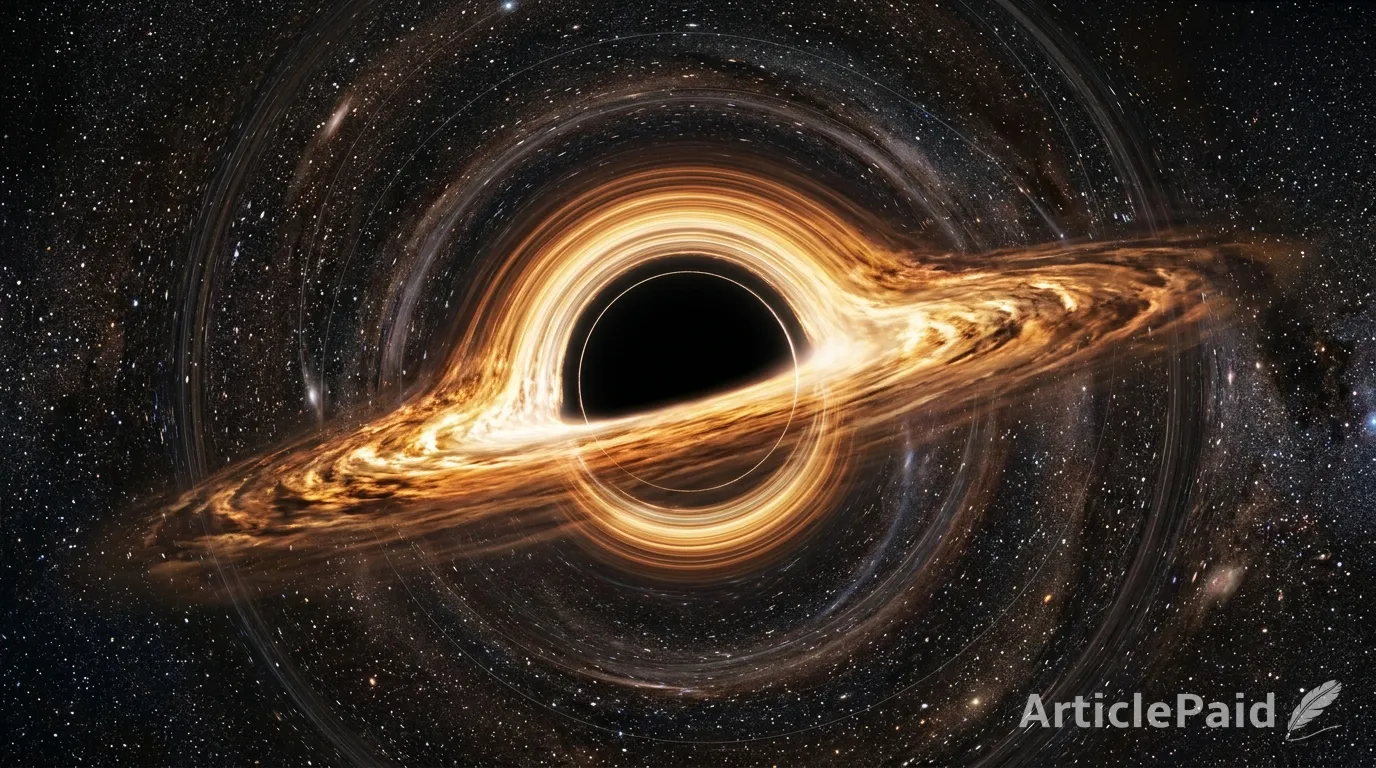 Final Thoughts
Black holes are not just mysterious objects that suck up everything, they are amazing effects caused by gravity and the laws of physics.
They help scientists understand some of the deepest questions about our universe by forming from collapsed giant stars and having such a large effect on the space-time around them.
We know a lot from studying them with modern astronomy however there are still many mysteries. Finding out what happens inside them and how quantum physics relates to gravity could change how we understand our universe in the future.
Overall black holes just show us how much more complicated, surprising and interesting our universe is.














Responses (0)
Sign in to share your thoughts.
Sign in