
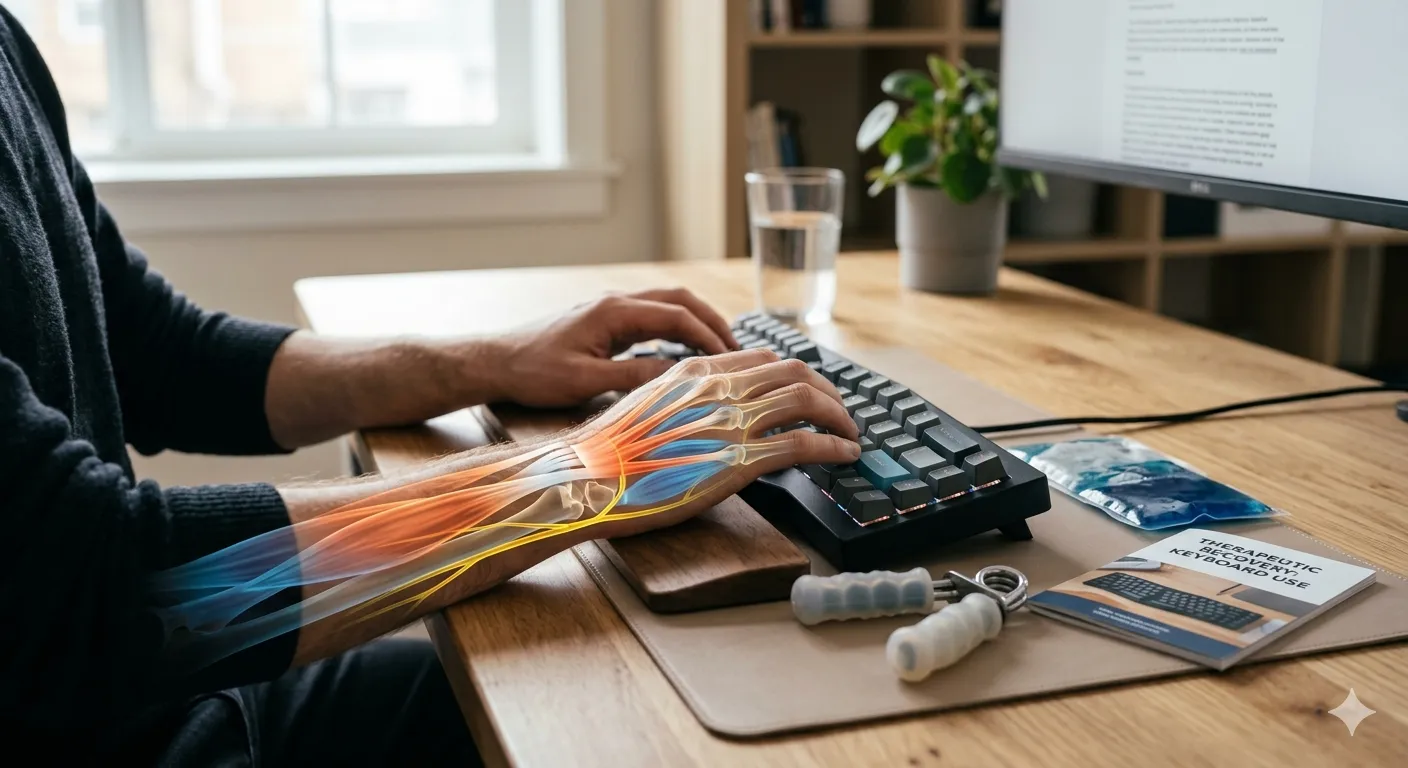
Most people barely notice it. Yet each keystroke triggers a cascade of physiological events—muscle contractions, nerve signals, tendon gliding—that, over time, can insidiously strengthen or weaken your muscles.Understanding how your body reacts to using a sensible keyboard isn't just a theoretical exercise. It's the foundation for more efficient and pain-free productivity..
How does your body respond to typing?
When you squeeze something, the muscles in your upper and lower arm the forearm muscles contract. These nerves travel between the fibers of your wrist, guided by a passage called the carpal tunnel.. Along the way, the median and ulnar nerves transmit sensation and motor commands with astonishing speed..
Continue reading this Article by fatimagul
Join our community to access the full story. Creating an account is completely free and only takes a moment.
- Read unlimited free publications across the platform
- Directly support independent journalists and authors
- Join discussions, leave reactions, and save your favorites





















Responses (0)
Sign in to share your thoughts.
Sign in