
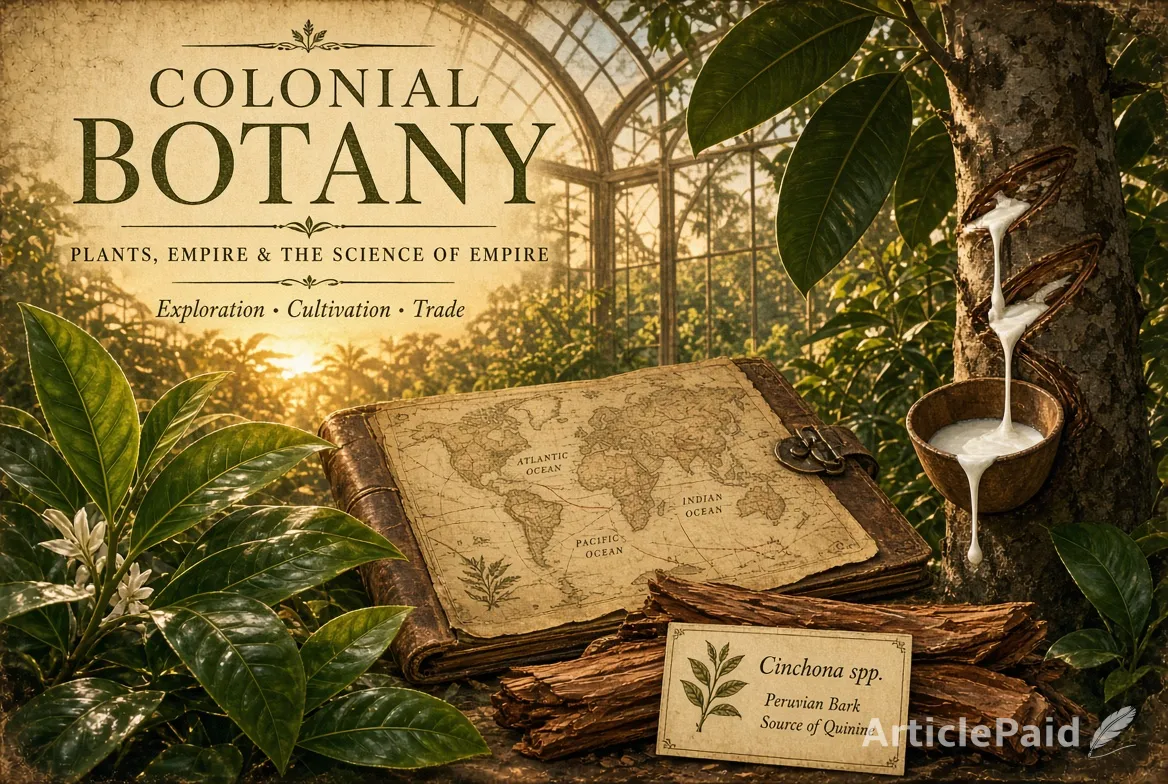
Colonial Botany as Soft Power : When Plants Became Empire Builders
Next time you sip a cup of tea, bounce a rubber ball, or stir a gin and tonic, pause for a second. Those everyday items carry a quiet but powerful history. In the 18th and 19th centuries, European powers turned plants into tools of empire. Collecting, studying, and moving them across oceans became a form of soft power that reshaped economies, health, and global trade—often more effectively than armies or treaties.
At the heart of this story sat the botanical gardens. Kew Gardens near London acted like a central switchboard. Seeds and seedlings arrived from every corner of the world, were carefully nurtured in greenhouses, and then shipped out again to colonies with the right climate. Other empires ran similar networks—the Dutch had Buitenzorg in Java, the French had their own gardens—but Kew became the most famous. These places looked peaceful and scientific. In reality, they functioned as nurseries for economic control.
Continue reading this Article by imtiaz
Join our community to access the full story. Creating an account is completely free and only takes a moment.
- Read unlimited free publications across the platform
- Directly support independent journalists and authors
- Join discussions, leave reactions, and save your favorites






















Responses (0)
Sign in to share your thoughts.
Sign in