
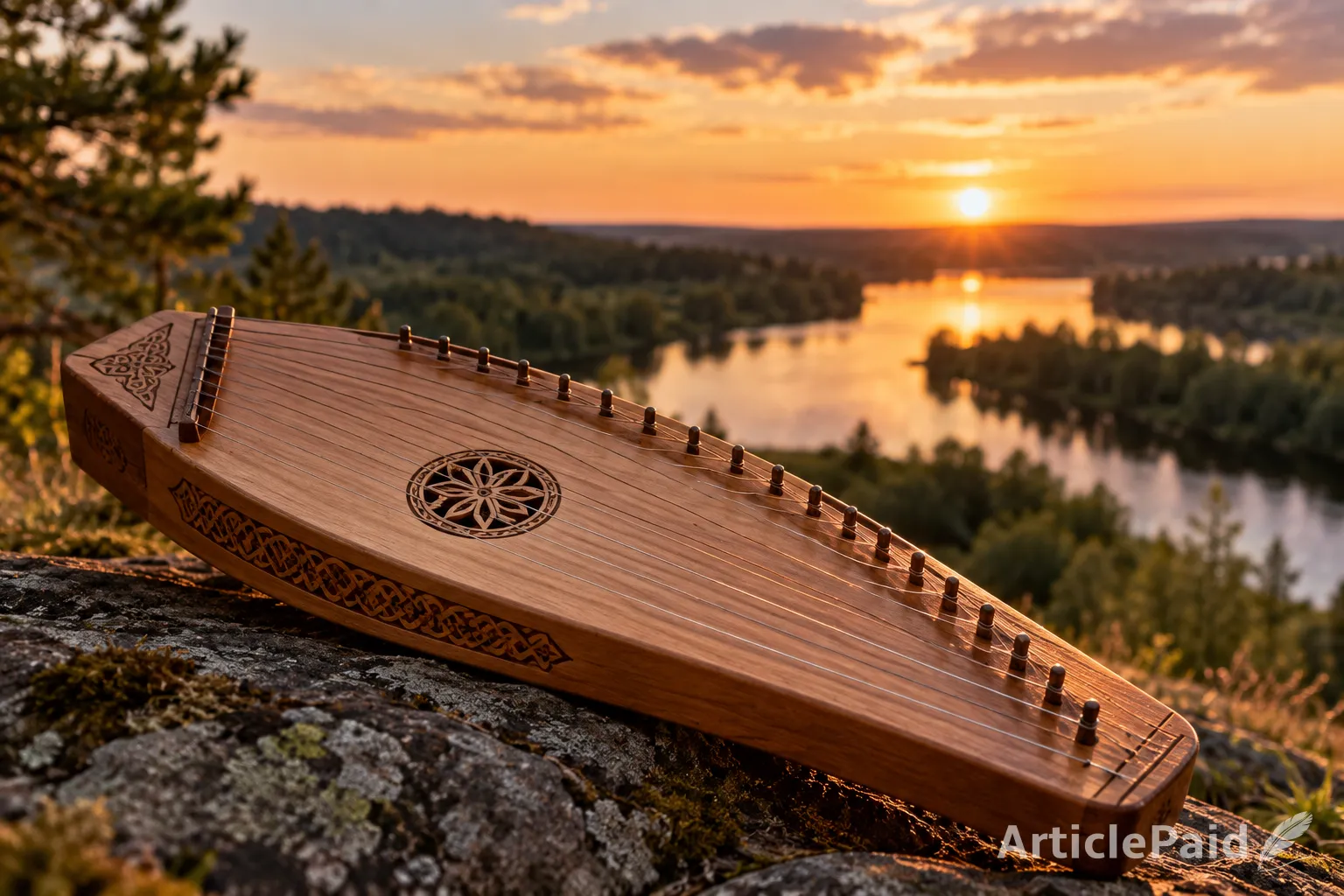
Every lasting cultural tradition begins somewhere. Sometimes it starts with a major festival supported by established institutions. In other cases, it grows from a much simpler idea: a musician decides that an instrument, a community, or a particular form of creativity deserves its own day of recognition.
World Guslar Day belongs to the second category. First celebrated on September 8, 2026, this new international initiative aims to bring greater attention to the gusli, an ancient plucked string instrument, and to the people who keep its music alive.
But can a celebration that began with one musician's idea eventually become a recognized annual tradition across different countries?
The answer depends on more than enthusiasm. It involves cultural identity, international cooperation, education, and the willingness of communities to make the celebration their own.
An Ancient Instrument With a New Celebration
The gusli has a long history in Eastern European musical culture. Its distinctive sound has accompanied traditional songs, storytelling, and instrumental performances for centuries.
Although many people associate the instrument with folklore and historical imagery, contemporary gusli musicians continue to expand its possibilities. They perform traditional melodies, compose original works, experiment with arrangements, and introduce the instrument to audiences through digital platforms.
World Guslar Day offers these activities a shared moment of recognition.
The celebration takes place annually on September 8 and welcomes performers, instrument makers, teachers, students, and listeners. Its initiator, Belarusian musician and instrument maker Yarosvet (Dmitry Bachishche), developed the idea after years of creating and playing the gusli.
Rather than focusing exclusively on famous performers, the initiative recognizes everyone who contributes to the instrument's continuing development.
This inclusive approach could become one of its greatest strengths.
Why Musical Traditions Need More Than History
An instrument may possess centuries of history without enjoying widespread recognition among modern audiences.
Traditional music often survives through dedicated teachers, local ensembles, individual craftspeople, and families who pass their knowledge between generations. However, these communities may remain relatively small or geographically separated.
An annual celebration can create a point of connection.
When people know that a particular date is dedicated to an instrument, they gain a reason to organize concerts, discover performers, publish educational materials, or introduce children to unfamiliar sounds.
The event becomes particularly valuable when participation extends beyond professional musicians.
A student playing a simple melody, a craftsperson explaining how an instrument is built, and a listener sharing a favorite recording can all contribute to the same cultural initiative.
That sense of collective ownership is essential if World Guslar Day is to grow beyond its first celebrations.
Connecting Musical Cultures Across Borders
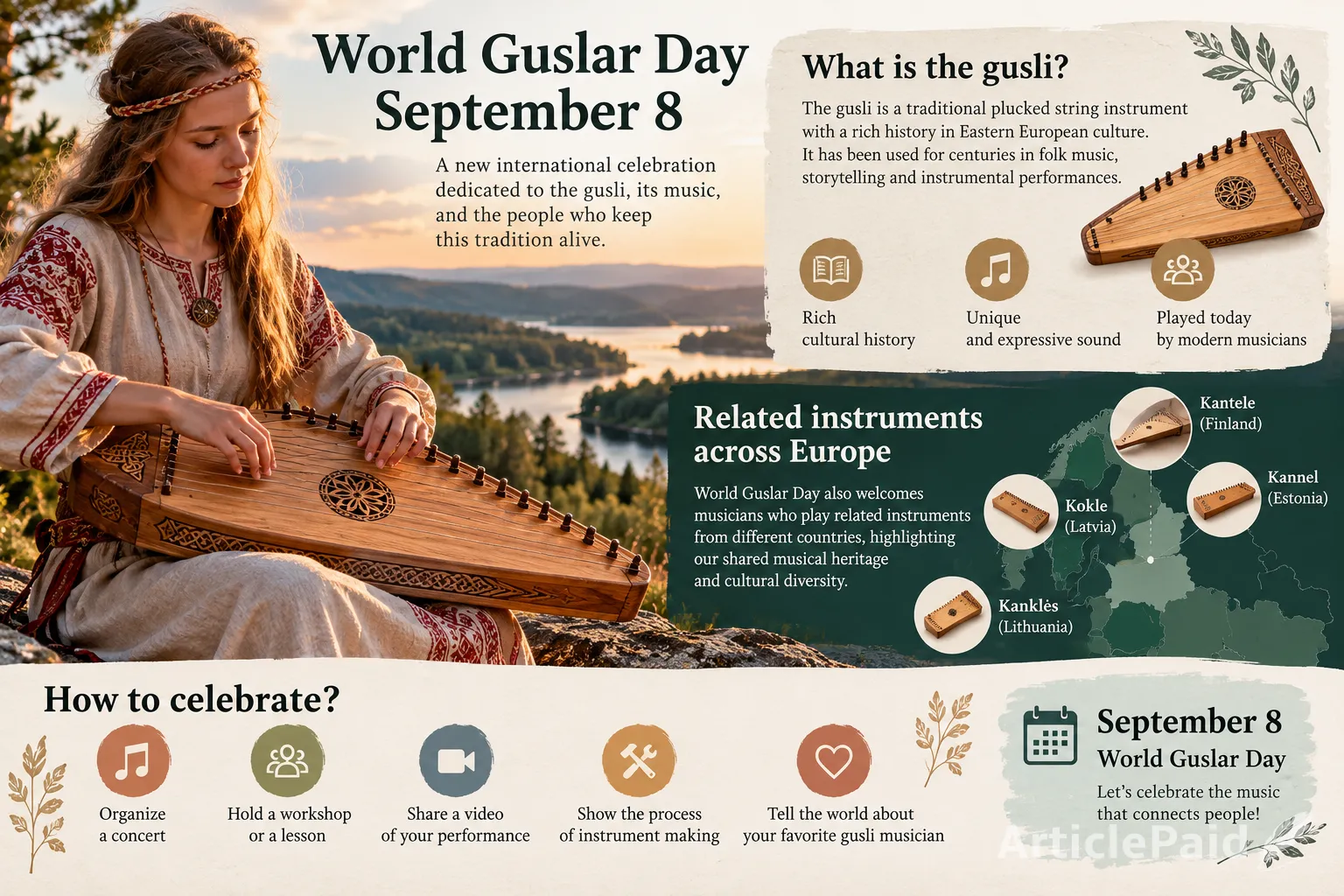
One of the most interesting aspects of World Guslar Day is its openness to related string instruments.
The celebration welcomes musicians who play the Finnish kantele, Latvian kokle, Lithuanian kanklės, Estonian kannel, and other instruments belonging to neighboring musical traditions.
These instruments have their own histories, construction methods, repertoires, and cultural meanings. Recognizing their differences is just as important as appreciating their similarities.
An international celebration could encourage musicians to explore these connections through joint concerts, workshops, and educational projects.
Imagine a September 8 online concert featuring performers from several countries. Each musician introduces their instrument, shares a traditional composition, and explains how its music developed within their community.
Such an event would offer more than entertainment. It could help listeners understand the diversity of European musical heritage while giving performers opportunities to exchange knowledge.
The goal would not be to combine distinct traditions into a single identity, but to create a welcoming space where each receives greater visibility.
Can Social Media Help Establish a Lasting Tradition?
Modern cultural initiatives do not necessarily need expensive venues or large organizational structures to reach international audiences.
A short video can introduce the sound of the gusli to someone who has never seen the instrument. An online lesson can connect a teacher with students living thousands of kilometers away. A workshop recording can demonstrate traditional craftsmanship to viewers interested in musical history.
For World Guslar Day, digital participation could make the celebration accessible even in places where no gusli concerts are available.
The initiative's official World Guslar Day website invites participants to organize performances, open workshops, lessons, and online activities, as well as share their events with the wider community.
However, visibility alone cannot establish a lasting tradition.
A successful international celebration also needs continuity. Musicians must have reasons to participate each year, educational organizations need opportunities to become involved, and new audiences should feel welcome regardless of their previous musical knowledge.
Social media may help people discover the event, but meaningful experiences will determine whether they return.
The Role of Schools, Teachers, and Instrument Makers
If World Guslar Day is to become an established tradition, education could play a particularly important role.
Musical heritage remains alive when younger generations encounter it directly rather than learning about it only from books or museum exhibitions.
Schools and cultural centers could organize instrument demonstrations, introductory lessons, or small performances around September 8.
Instrument makers could open their workshops and explain how the choice of wood, string arrangement, and craftsmanship influences the finished instrument.
Teachers might introduce students to traditional melodies before encouraging them to create their own interpretations.
These activities would make the celebration relevant to people who have never played the gusli.
They would also highlight an important reality: preserving a musical tradition requires more than protecting historical objects. It depends on the continued exchange of skills, experiences, and artistic ideas.
What Will Determine the Future of World Guslar Day?
New cultural holidays rarely become established overnight.
The first celebration can attract curiosity, but long-term success depends on whether people continue to find value in participating.
For World Guslar Day, several developments could make a meaningful difference:
Regular concerts and community events in different countries.
Partnerships with music schools, museums, and cultural organizations.
Opportunities for young performers to present their work.
International exchanges involving related traditional instruments.
Accessible online resources for people discovering the gusli for the first time.
Equally important is the freedom for communities to develop their own ways of celebrating.
A small family performance should feel just as welcome as a formal concert. A beginner sharing their first recording should not feel that participation requires professional-level skills.
An international tradition becomes stronger when people recognize themselves as contributors rather than spectators.
A Future Tradition Starts With Participation
It is too early to know whether World Guslar Day will become a widely recognized musical occasion. Its first celebration in 2026 marks a beginning, not a guarantee of future success.
Yet the initiative already offers something valuable: a shared date around which musicians, educators, craftspeople, and listeners can connect.
The gusli's future does not depend solely on preserving the music of previous generations. It also depends on giving today's musicians opportunities to create, collaborate, and be heard.
If September 8 encourages even a few more people each year to discover the instrument, attend a concert, learn a melody, or support a local performer, the celebration will have achieved something meaningful.
And perhaps that is how new international traditions are actually built: not through one spectacular event, but through countless small acts of participation repeated year after year.
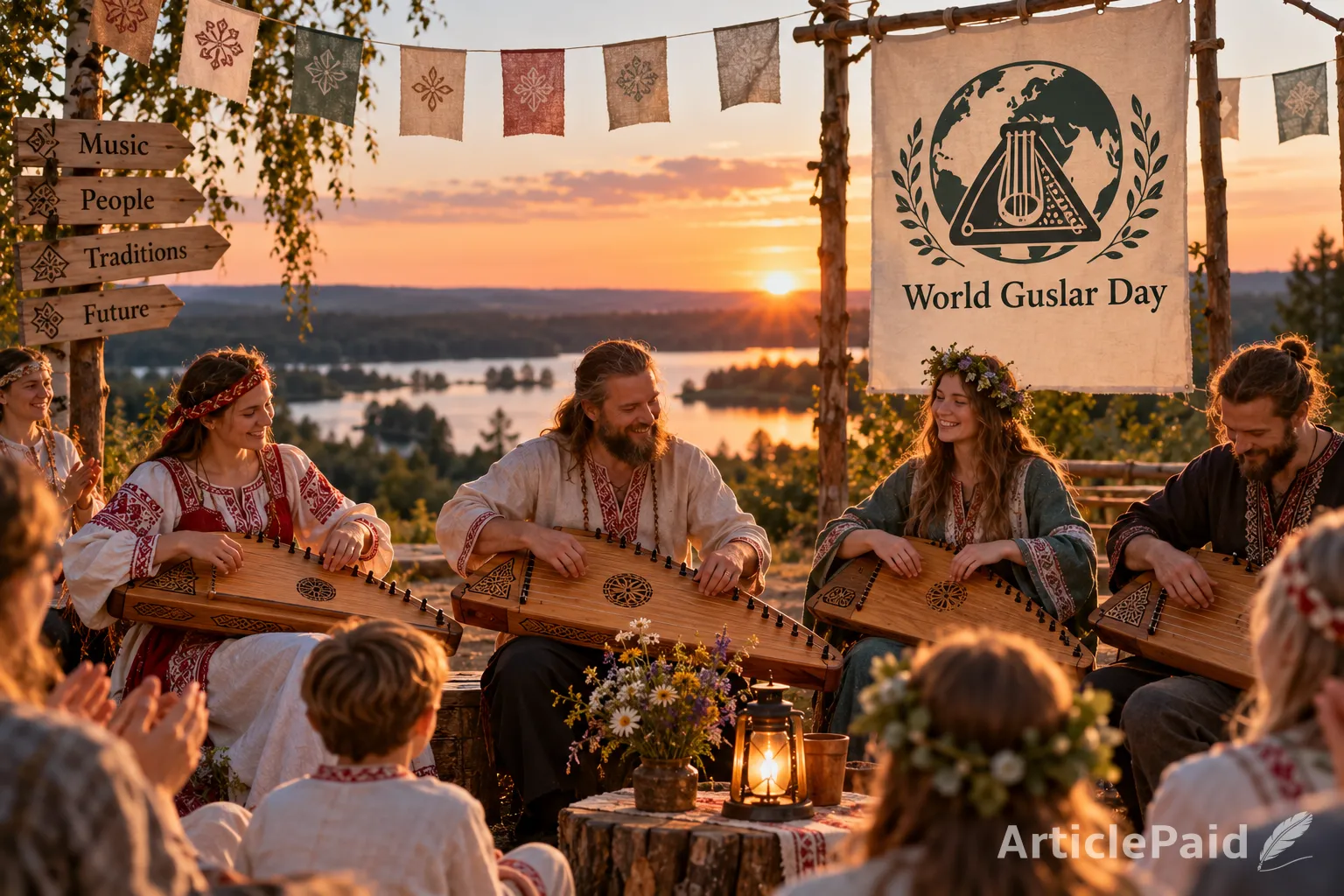
World Guslar Day has taken its first step. What it becomes next will depend on the people who choose to celebrate it.















Responses (0)
Sign in to share your thoughts.
Sign in