
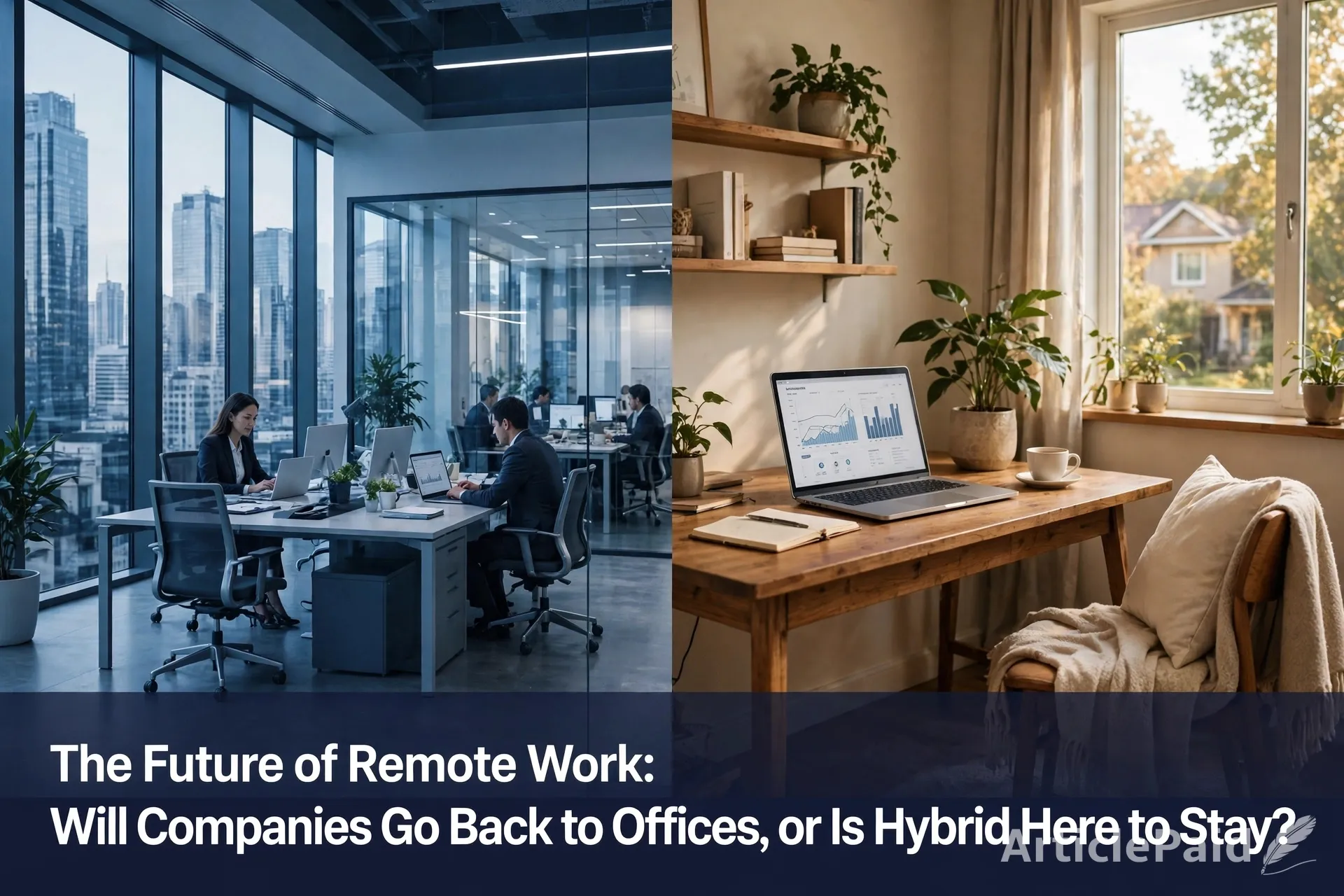
Will Companies Go Back to Offices, or Is Hybrid Here to Stay?

During the COVID-19 pandemic, the world of work underwent a massive transformation overnight. Lockdowns and social distancing mandates forced employees into remote work, which quickly reshaped traditional working norms for good.
Today, the central question is: Will companies eventually pull all their employees back into physical offices, or has the hybrid model—a mix of in-office and remote work—become a permanent reality?
Let’s take a detailed look at where the future of work is headed.
1. The Push to Return to the Office (RTO)
Over the past couple of years, major global corporations like Amazon, Google, Microsoft, and Apple issued mandates requiring employees to work from the office at least three to five days a week. The core reasons behind this shift include:
- Collaboration & Innovation: Corporate leaders argue that in-person interactions foster better brainstorming, faster problem-solving, and spontaneous creativity that is hard to replicate virtually.
- Company Culture: Building a cohesive company culture and onboarding new hires is significantly harder in a fully remote environment. Casual, informal chats in the office help build interpersonal trust and team bonding.
- Productivity & Oversight: A segment of management feels that tracking accountability and maintaining uniform productivity levels is more challenging when teams work remotely.
2. Why the Hybrid Model is Here to Stay

On the other hand, employees and many economists argue that hybrid work is the true future of the workplace. There are compelling reasons supporting this view:
- Time and Cost Savings: Avoiding lengthy daily commutes saves hours of travel time and reduces fuel or transit expenses, making hybrid options highly attractive to employees.
- Better Work-Life Balance: Working from home gives employees greater flexibility to balance personal lives, care for family, and reduce overall burnout and stress.
- Global Talent Pool: For employers, geographical barriers have largely dissolved. Companies can recruit top talent from anywhere in the world without requiring every employee to relocate to a specific city.
3. What Will the Future Actually Look Like?

Industry experts predict that the workplace will neither revert entirely to pre-pandemic full-time office requirements nor remain 100% remote. Instead, a flexible hybrid model will dominate, characterized by:
- Outcome-Based Culture: Companies will focus less on "seat time" (the number of hours spent at a desk) and more on tangible results, deadlines, and the quality of work produced.
- Redefining the Purpose of the Office: Offices will no longer be places where employees sit silently in cubicles doing solitary tasks. Instead, they will serve as collaboration hubs designed for meetings, strategic planning, training, and team-building events.
- Advanced Technology: Virtual Reality (VR), AI-powered productivity tools, and asynchronous communication platforms will continue to bridge the gap between remote and in-office team members.
Conclusion
Ultimately, companies cannot completely turn back the clock. While certain industries—such as healthcare, manufacturing, and retail—naturally demand a physical presence, for knowledge workers and tech professionals, the hybrid model has become the new normal. Organizations that embrace this flexibility will be best positioned to attract, retain, and inspire top-tier talent in the years ahead.



















Responses (0)
Sign in to share your thoughts.
Sign in