
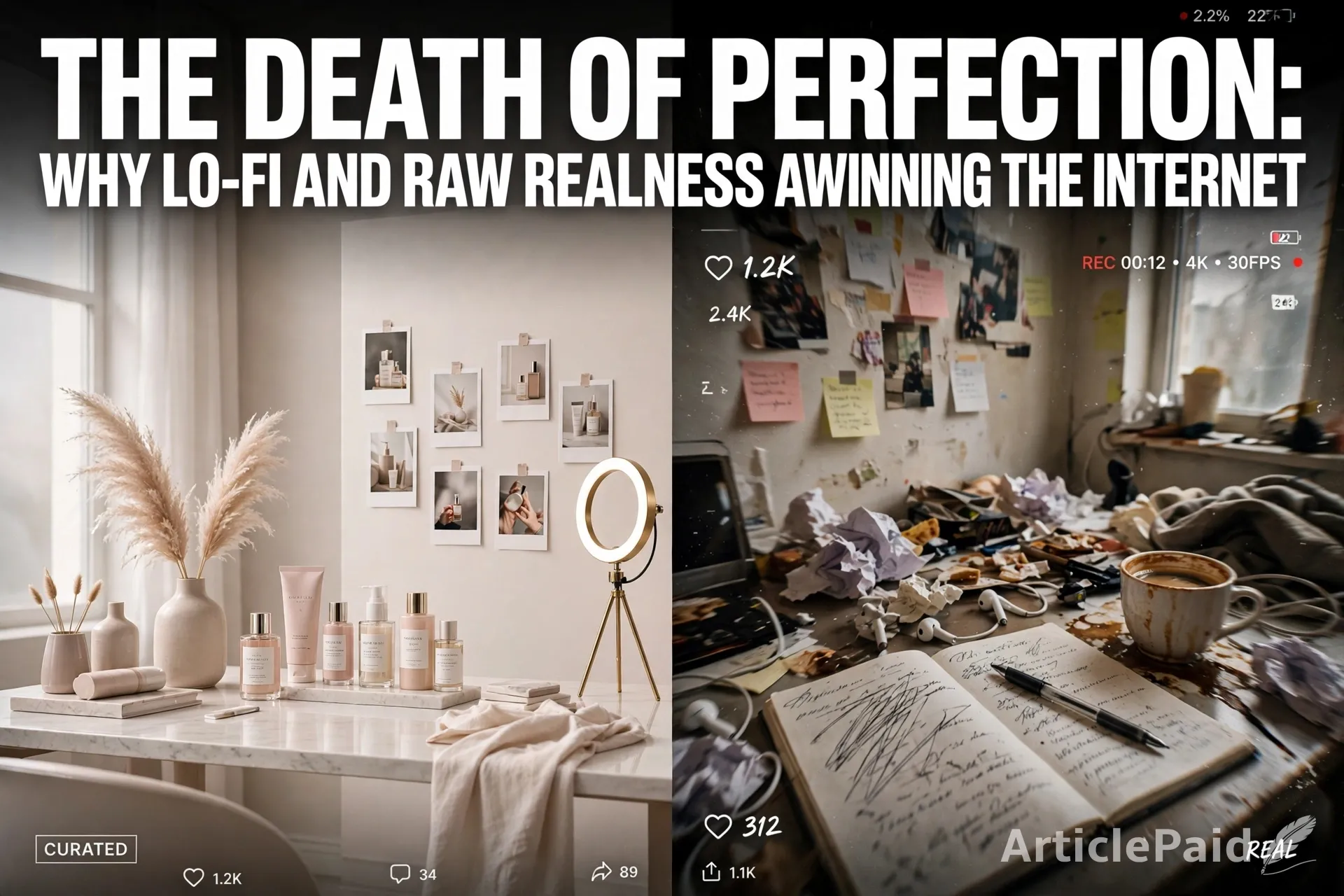
The Death of Perfection: Why “Lo-Fi” and Raw Realness Are Winning the Internet
Have you noticed how your social media feed looks completely different lately? The hyper-curated aesthetic, heavily edited photos, and sleek studio videos that dominated platforms for over a decade are rapidly vanishing. In their place, raw phone footage, unscripted moments, and unfiltered stories are pulling millions of views.
We are officially living in the era of "Lo-Fi" content—where imperfection is the highest currency of trust on the internet.
The Social Media Fatigue
For years, influencers and brands convinced us that life was lived through pastel presets, perfectly symmetrical avocado toasts, and immaculate aesthetic studio setups. But as generative AI tools flooded the web with sleek, automated visuals and polished synthetic content, a massive cultural shift occurred.
When everything can be synthesized, perfected, or generated in seconds, perfect visual polish loses its value. Audiences started experiencing a collective exhaustion from artificial perfection.
People no longer want to be sold an idealized fantasy; they want human connection, authenticity, and relatable truth.
Why "Imperfection" Goes Viral

Today’s algorithms across platforms like TikTok, Instagram Reels, and YouTube Shorts prioritize watch time and engagement over production budget. Raw, casual videos recorded on a smartphone—often referred to as Lo-Fi (Low-Fidelity) content—tend to outperform high-budget commercials.
- Instant Trust: Viewers instantly recognize shaky phone video as genuine. A creator talking directly to the camera without dramatic cuts or voice filters feels like a friend sending a quick update.
- Relatability Over Aspiration: Audiences prefer seeing real-world mistakes, stuttered words, behind-the-scenes struggles, and unedited bloopers. It breaks the digital wall and feels human.
- The Pushback Against AI: As synthetic media becomes widespread, human flaws have become proof of authenticity. A slightly flawed, unpolished video signals to the viewer: "A real human made this."
From Creators to Major Brands

This shift isn't limited to individual creators—even corporate giants are rewriting their social strategies. Multi-billion dollar brands are ditching agency-produced commercial ads for casual, informal videos shot in hallway corridors on basic mobile phones.
CEOs are ditching formal boardroom statements to post unedited commentary directly from their desks. Instead of glossy campaigns, businesses share unfiltered "day in the life" stories, real customer reactions, and honest product journeys.
How to Adapt to the Trend
If you create content, build a brand, or share your work online, here is how you can leverage this trend:
- Stop Overthinking Production: Put down the professional lighting rig and expensive cameras. Pick up your phone and start recording.
- Show the Process, Not Just the Result: Show the mess, the failed drafts, and the behind-the-scenes chaos. The process is often far more engaging than the final product.
- Speak Naturally: Ditch rigid scripts. Conversational, straightforward delivery builds a much stronger connection with your audience.
Conclusion
The era of hyper-curated perfection on the internet is fading. As digital media grows increasingly automated, authentic human experience has become the most valuable content online. You don't need a massive budget or flawless aesthetics to capture attention anymore—all you need is a real story, raw camera footage, and the confidence to be genuinely yourself.


















Responses (0)
Sign in to share your thoughts.
Sign in