
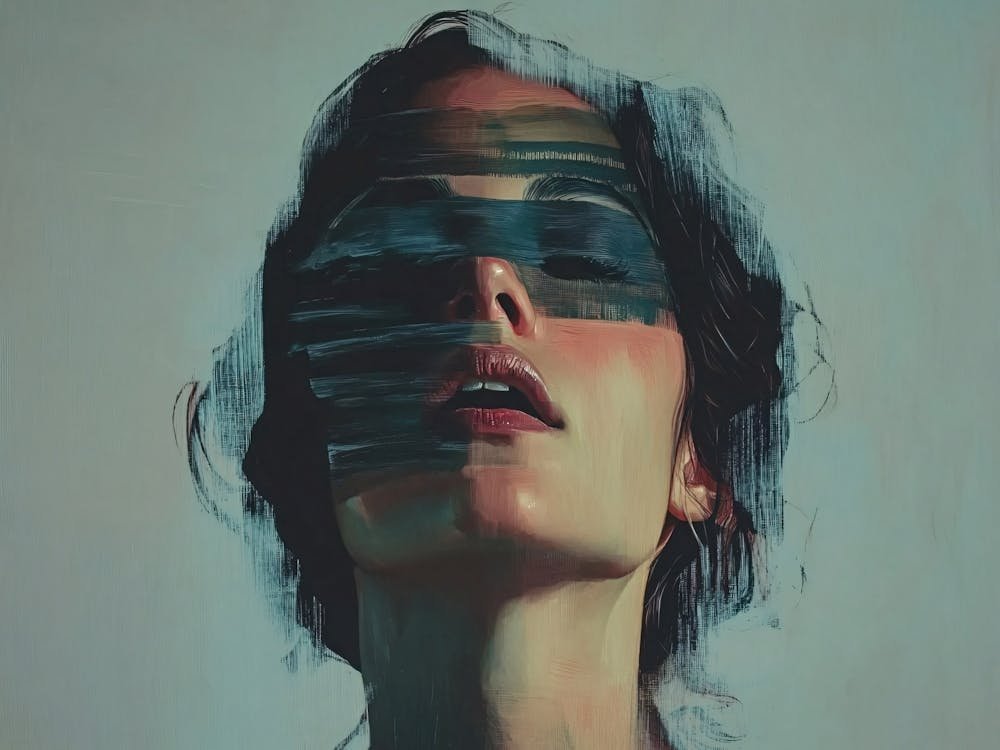
Have you ever walked into a room you’ve never visited before, or heard a conversation for the first time, only to be struck by an overwhelming feeling: I have experienced this exact moment before?
This uncanny phenomenon is known as déjà vu—a French phrase meaning "already seen." About 60% to 70% of people experience it at least once in their lives. While modern science points to quick, harmless blips in neural processing, rich spiritual traditions—including Islamic theology—offer fascinating perspectives on what might be occurring beyond the physical realm.
The Spiritual Realm: Echoes of the Unseen (Al-Ghaib)
While the Quran and authentic Sunnah do not use a modern term for déjà vu, Islamic scholars and thinkers have reflected on concepts that resonate deeply with the experience of recognizing something unremembered.

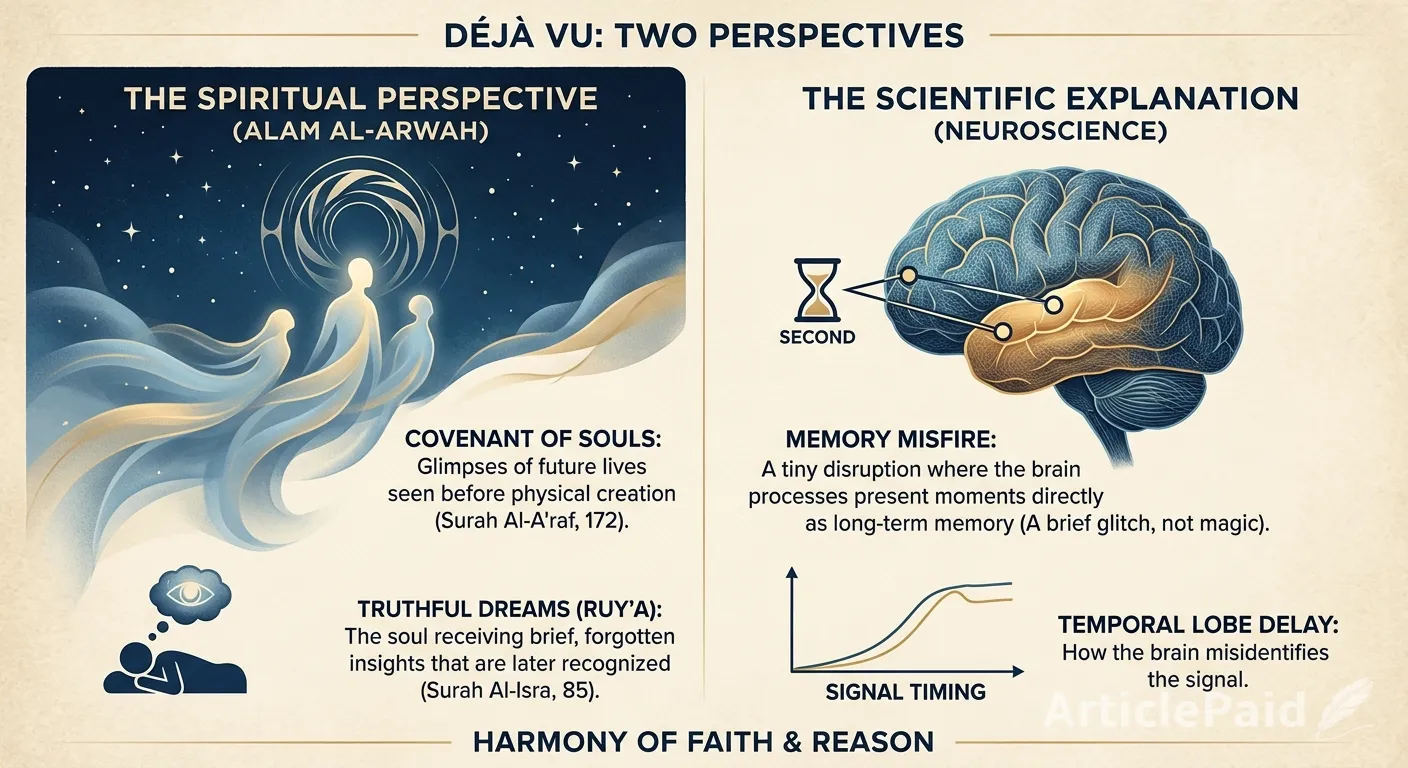
1. The Primordial Covenant (Alam al-Arwah)
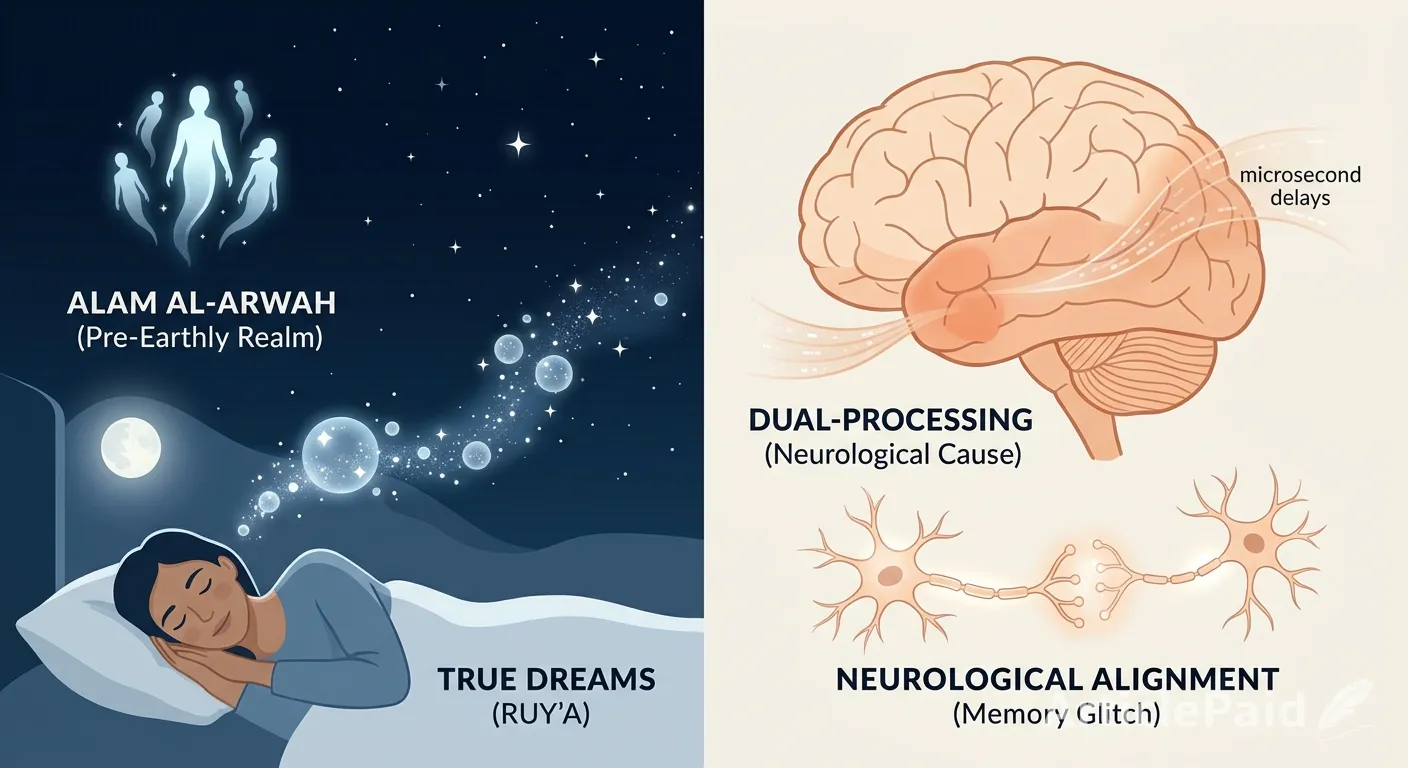
In Islamic theology, human existence did not begin at birth. Before our physical creation, all human souls were brought together in a realm known as Alam al-Arwah (the Realm of Souls).
As described in Surah Al-A'raf (7:172), Allah gathered every soul to testify to His oneness:
"Am I not your Lord?" They said, "Yes, we have testified."Some scholars suggest that during this pre-earthly existence, souls may have been shown glimpses of their future lives, journeys, and destinations. When an event unfolds in your daily life, the sudden sensation of familiarity might be a faint, subconscious echo of that primordial knowledge returning to you.2. Dreams and Visionary Sleep (Ruy'a)
Another compelling connection lies in the Islamic understanding of sleep and dreams. Islamic tradition identifies three distinct types of dreams:
3. A Call to Humility and Curiosity
Experiencing déjà vu can also serve as a gentle reminder of the mystery of the soul (Ar-Ruh). In Surah Al-Isra (17:85), Allah reminds humanity of the limits of our knowledge:"And they ask you concerning the Rūḥ (the soul). Say, 'The Rūḥ is of the affair of my Lord. And mankind has not been given of knowledge except a little.'"Moments like déjà vu highlight that human consciousness is far deeper than what we can observe or measure under a microscope.The Science: Neurological Blips in Memory
Islamic thought encourages the study of natural laws and physical systems. Observing déjà vu through a spiritual lens does not mean rejecting scientific explanations. In fact, neuroscience offers clear physical explanations for how the brain creates this feeling:
Scientific Theory How It Works Dual Processing Delay Information is usually processed simultaneously by two different visual pathways in the brain. If one pathway experiences a microsecond delay, the brain receives the same scene twice—interpreting the second signal as a past memory rather than a current reality. Holographic Memory Activation If a new setting shares a single detail (like the smell of a flower, the lighting, or the placement of a chair) with an old memory, your brain might match the entire current scene with that past memory, making the whole situation feel familiar. Temporal Lobe Misfire The temporal lobe controls memory storage and recognition. A brief, tiny electrical misfire can mistakenly label a present perception as a long-term memory. Bridging Faith and Reason
Rather than viewing science and spiritual traditions as opposing ideas, many believers view them as complementary layers of truth. The physical mechanism—such as a split-second delay in temporal lobe processing—explains how the brain experiences the moment, while spiritual perspectives reflect on why human consciousness carries such deep capacity for intuition and memory.


















Responses (0)
Sign in to share your thoughts.
Sign in